
Mail
yangtao@jx-aiyi.com
Preparative Chromatography Columns: Applications and Differences from Analytical Columns
Author:JIANGXI AIYI HI-TECH CO., LTD.
Click:
Time:2025-07-09 09:42:55
What are preparative columns?
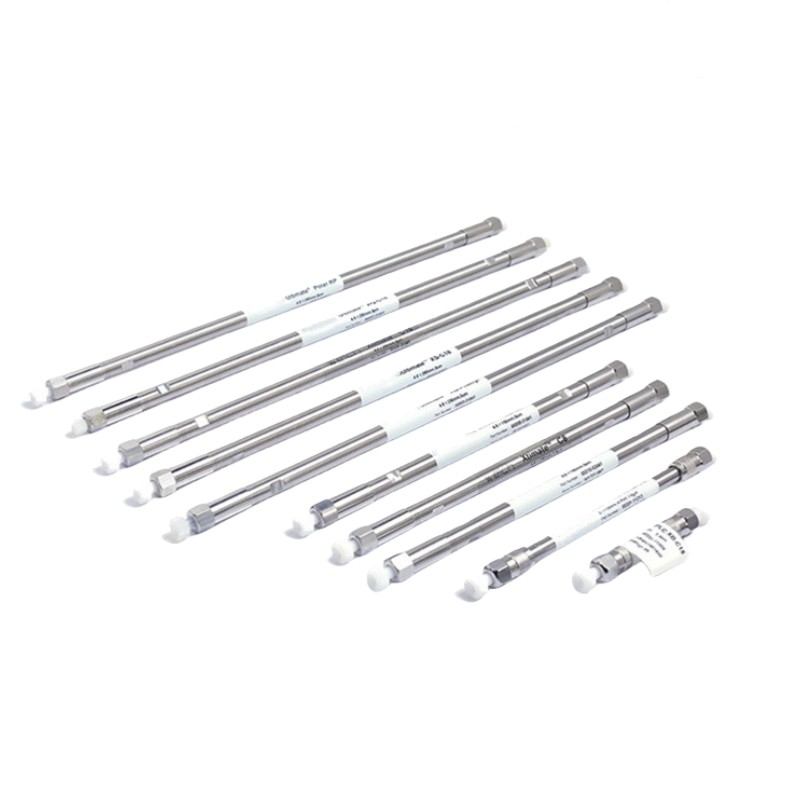
Preparative columns are designed to purify and separate large quantities of compounds, not just detect or quantify them. These columns are often used in pharmaceutical, biotechnology, natural product extraction, and chemical synthesis laboratories that need to purify milligram to gram quantities of material.
Key Applications of Preparative Columns
- Drug Development: Isolation of Active Pharmaceutical Ingredients (APIs)
- Natural Product Research: Purification of Plant Extracts or Bioactive Molecules
- Peptide/Protein Purification: Isolation of Specific Proteins or Fragments
- Organic Synthesis: Removal of Impurities Following Chemical Reactions
- Chiral Separations: Large-Scale Separation of Optical Isomers
- Preparative columns are often integrated with a fraction collector, UV/Vis detector, and mass spectrometer for automated collection of pure compounds.
How Do Preparative Columns Differ from Analytical Columns?
| Feature | Analytical Column | Preparative Column |
| Purpose | Identification & quantification | Purification & collection |
| Column inner diameter | 2โ€“5 mm | 10โ€“50 mm or more |
| Typical sample size | ยตL scale | mL to 100+ mL |
| Flow rate | 0.1โ€“2.0 mL/min | 10โ€“100+ mL/min |
| Back pressure | Higher due to small particles | Lower per unit area, but requires stronger pumps |
| Detection | High sensitivity, minimal sample loss | Optimized for load capacity and purity |
| Cost per injection | Low | Higher (due to more solvent/sample used) |
Important considerations for preparative applications
- Use larger particles (typically 10-15 µm) to achieve better flow rates
- Make sure your HPLC system supports high flow rates and high sample loads
- Clean and maintain columns regularly to avoid clogging with sample residues
- Use guard columns or precolumns to protect primary packings
Conclusion
Preparative columns are an important tool for high-purity compound separations, especially in research, scale-up, and production environments. While they perform the same separations as analytical columns, their design, scale, and goals are completely different. Choosing the right column type based on your goal (analysis vs. purification) is critical to the success of your chromatographic workflow.
Buyer's Tip: If you are scaling up from an analytical to a preparative method, make sure to optimize method transfer by proportionally adjusting flow rates, injection volumes, and column dimensions.
Recommended article
—


Recommended Products
—

AY-601Q Fully Automatic Transformer Oil Analysis Gas Chromatograph
The AY-601Q Fully Automatic Transformer Oil Analysis Gas Chromatograph is a next-generation dissolved gas analysis (DGA) system designed specifically for electric power applications. Integrating mechanical oscillation degassing, gas chromatography detection, automation control, and intelligent analysis, it completes the analysis of hydrogen, methane, ethylene, ethane, acetylene, carbon monoxide, carbon dioxide, and other gas components within 7 minutes per sample injection,with a 15-position aut
Interview

MS10-H500-Pro LCD Digital Magnetic Hotplate Stirrer
The MS10-H500-Pro is a high-performance LCD digital magnetic hotplate stirrer featuring a 10-inch glass ceramic work plate that handles up to 30L of liquid with powerful magnetic stirring. With digital speed control from 100-1500rpm, heating up to 500°C, PT1000 external temperature sensor support (±0.2°C accuracy), a “HOT” safety warning, and real-time SD card data recording, it delivers precise, safe, and traceable heating and stirring for modern laboratories.
Interview

Frozen Animal Semen Filling & Sealing machine
This automatic frozen semen straw filling and sealing machine integrates automatic counting, quantitative filling, and ultrasonic welding into one streamlined workflow. With a filling efficiency of approximately 2,000 straws per hour, touch-screen control, and real-time process monitoring, it minimizes manual intervention and supports standardized batch production—making it the ideal solution for animal breeding stations, breeding laboratories, and frozen semen production lines.
Interview

AY-GCX-624 Medium polarity GC column
The 6% Cyanopropylphenyl-94% Dimethylpolysiloxane GC Column is a high-performance medium-polarity chromatographic column designed for gas chromatography (GC) applications. It offers exceptional versatility, robustness, and sensitivity, making it ideal for a wide range of analytical tasks across industries such as pharmaceuticals, environmental monitoring, petrochemicals, and cosmetics.
Interview

EX-1800 High-Performance HPLC System
This high-performance liquid chromatograph (HPLC) is a high-precision, high-stability analytical device designed for high-demand liquid phase separation analysis in laboratories. It is equipped with a 70MPa ultra-high pressure infusion pump, providing a flow rate range of 0.001-10ml/min, ensuring precise flow control to meet diverse experimental needs. The built-in PDA diode array detector provides a wide wavelength range of 200-800nm, with excellent wavelength accuracy and low noise performance
Interview

Protein Purification System
This instrument can carry out a variety of commonly used purification techniques, such as affinity chromatography, ion exchange chromatography, hydrophobic chromatography, and gel filtration. Therefore, this system can support the purification of various proteins and nucleic acids, including recombinant proteins, antibodies, vaccines or natural proteins.
Interview

HPLC Guard Column Cartridge & Holder
The Guard Column Cartridge & Holder system provides a cost-effective solution for protecting analytical HPLC columns from particulate and strongly retained chemical contaminants. With a reusable stainless-steel holder and replaceable cartridges packed with stationary phases matched to the analytical column, the system maintains separation efficiency, peak shape, and reproducibility,significantly extending column lifetime and reducing operating costs.
Interview

T-5 Double Beam UV-Vis Spectrophotometer
The T-5 Double Beam UV-Vis Spectrophotometer sets a new benchmark for analytical precision. Built on a C-T optical structure with an imported photomultiplier tube detector and dual imported light sources, it delivers exceptional wavelength accuracy (±0.3nm), ultra-low stray light (≤0.03%τ), and outstanding stability (0.0003A/h). Controlled via a 7-inch color touch screen, the T-5 is the ideal choice for quality control, research, and testing laboratories across pharmaceutical, environmental, and
Interview

RE200-Pro Rotary Evaporator
The RE200-Pro is a large-capacity rotary evaporator engineered for high-efficiency solvent evaporation and recovery. With a 20L sample flask, heating range up to 180°C, double-layer high-efficiency condenser, and fully automated motor lifting, it delivers reliable performance for pharmaceutical, chemical, and industrial distillation processes,backed by comprehensive safety protections and an intelligent LCD control system.
Interview
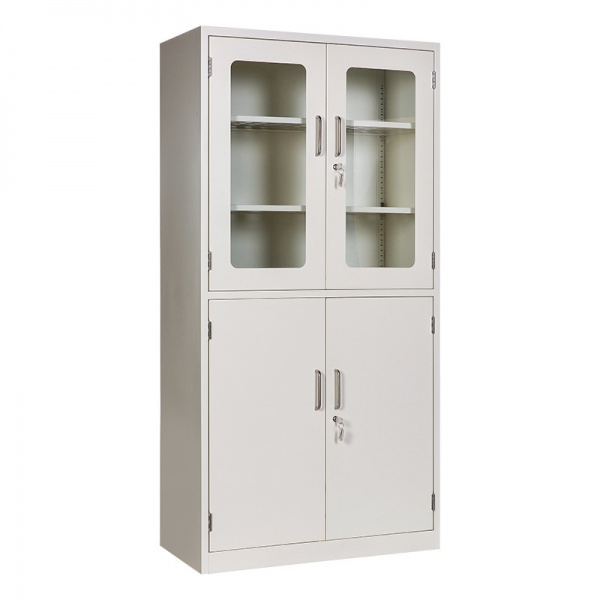
All-Steel Laboratory Medicine Cabinet
Interview

Desktop Fume Hood
The Desktop Fume Hood is a compact and versatile safety solution designed to maximize laboratory efficiency. Engineered for installation directly on central workbenches, this unit features a unique dual-sided access design, allowing two users to operate simultaneously from opposite sides. With a total height of 1500mm, it fits seamlessly into standard laboratory settings without obstructing overhead lighting or room circulation. This model is particularly ideal for educational institutions, r
Interview

Energy-Efficient Ducted Fume Hood
Laboratory Fume Hood (models V9-FG-1200 / 1500 / 1800). Dimensions 1200/1500/1800 × 900 × 2400 mm. Face velocity 0.3 m/s, 0 ppm tracer gas leakage, ultra-low 17.5 Pa static pressure. Energy-efficient design requires no extra make-up air. Narrow-edge construction maximizes workspace and viewing area. Fully certified to ANSI/ASHRAE 110-2016 and EN 14175-3-2019. Ideal for chemical, pharmaceutical, university and research laboratories.
Interview
ADDRESS
No. 609, High Tech Houju Street, Qingshanhu District, Nanchang City, Jiangxi Province




David Mabel James Elly

点击右上角
分享给朋友吧
CONTACT
Ph: +86 19318553935
+86 18079100967
+86 19318537228
+86 18170839926
Mail: james@jx-aiyi.com
mabel@jx-aiyi.com
anli@jx-aiyi.com
david@jx-aiyi.com
NEWSLETTER
