
Mail
yangtao@jx-aiyi.com
Ultimate Guide to Laboratory Countertop Materials: Phenolic, Epoxy, Ceramic, or PP?
Author:JIANGXI AIYI HI-TECH CO., LTD.
Click:
Time:2026-05-20 20:18:24
In laboratory construction, the countertop is the most frequently used surface and the primary support for sensitive equipment. Choosing the wrong material can lead to permanent etching from acid spills, structural warping, or even safety hazards.
Currently, mainstream lab countertop materials each have their unique strengths. There is no universally perfect material—only the one best suited for your specific experimental applications. This guide provides a deep dive into five major countertop materials to help you specify with confidence.
1. Phenolic Resin (Compact Laminate)
*(Standard on our T3 Fume Hoods)*
Phenolic resin countertops (often called solid compact laminate) are the most common and cost-effective choice, manufactured by impregnating kraft paper with resin and pressing it under high heat and pressure.
- Core Advantages:
- Cost-Effective: Budget-friendly, making it the go-to for standard labs.
- Impact Resistant: High physical toughness; does not chip or shatter easily.
- General Corrosion Resistance: Withstands most common acids, alkalis, and solvents.
- Eco-Friendly: High-quality boards meet E1 formaldehyde emission standards.
- Cost-Effective: Budget-friendly, making it the go-to for standard labs.
- Limitations: Not suitable for prolonged exposure to strong acids (e.g., Hydrofluoric acid, concentrated Sulfuric acid) or strong bases. Limited high-temperature resistance (typically 135°C–180°C); cannot handle direct flame or hot vessels straight from a furnace.
- Best For: General physics and chemistry labs, educational/teaching labs, electronics labs, and routine testing facilities.
2. Epoxy Resin
Cast from a mixture of epoxy resin and silica sand, epoxy worktops are the gold standard for heavy-duty chemistry labs.
- Core Advantages:
- Ultimate Chemical Resistance: Exceptionally resistant to the vast majority of strong acids, strong bases, and aggressive organic solvents.
- Superior Heat Resistance: Can withstand temperatures exceeding 300°C. You can place a hot crucible directly on the surface without blistering or cracking.
- Monolithic & Repairable: Non-porous surface inhibits bacterial growth and is easy to clean. If scratched, it can be sanded and polished back to a functional state.
- Ultimate Chemical Resistance: Exceptionally resistant to the vast majority of strong acids, strong bases, and aggressive organic solvents.
- Limitations: Higher price point compared to phenolic resin. Less resistant to heavy mechanical impact (a heavy, sharp object drop may cause a chip).
- Best For: Heavy chemistry labs, organic synthesis, pharmaceutical R&D, and university research centers.
3. Industrial Ceramic
Manufactured from special clays fired at extremely high temperatures and glazed with a chemically resistant coating, ceramic is a premium, specialized choice.
- Core Advantages:
- Absolute Chemical Resistance: Virtually impervious to all chemicals, including Hydrofluoric Acid and hot concentrated Sulfuric Acid.
- Extreme Heat & Scratch Resistance: Very high Mohs hardness; impervious to scratching. Can withstand temperatures up to 800°C or higher.
- UV Resistant: Will never fade or degrade under UV light exposure.
- Absolute Chemical Resistance: Virtually impervious to all chemicals, including Hydrofluoric Acid and hot concentrated Sulfuric Acid.
- Limitations: Extremely brittle! Highly susceptible to cracking or shattering upon physical impact. Very expensive. Cannot be cut or fabricated on-site.
- Best For: Strong acid/alkali labs, Hydrofluoric acid labs, high-temperature testing, and semiconductor labs requiring absolute particulate control.
4. Polypropylene (PP)
A pure thermoplastic material that pairs perfectly with All-PP fume hoods, designed exclusively for extreme corrosion environments.
- Core Advantages:
- The Acid Alkali Nemesis: Immune to almost all inorganic acids, alkalis, and solvents. It will never rust or corrode.
- Seamless Welding: Can be seamlessly welded to PP sinks for a completely flush, crevice-free, and easy-to-clean workspace.
- The Acid Alkali Nemesis: Immune to almost all inorganic acids, alkalis, and solvents. It will never rust or corrode.
- Limitations: Not heat resistant! Deforms easily at temperatures above 80°C. Low physical strength; easily scratched. Not fireproof.
- Best For: Acid washing labs, electroplating labs, semiconductor wet etching, and the internal work surfaces of PP fume hoods.
5. Stainless Steel (304 / 316L)
Fabricated from high-grade stainless steel sheets with brushed or anti-static finishes.
- Core Advantages:
- Hygienic & Antibacterial: Seamless and easy to sterilize, meeting strict GMP and FDA cleanliness standards.
- Highly Durable: Exceptionally tough; impervious to physical impact.
- Heat & Flame Resistant: Completely unaffected by open flames or high heat.
- Hygienic & Antibacterial: Seamless and easy to sterilize, meeting strict GMP and FDA cleanliness standards.
- Limitations: Susceptible to chloride corrosion (salts, Hydrochloric acid). While 316L is more resistant than 304, it is still unsuitable for prolonged strong acid exposure. Prone to visible scratching and can cause glare.
- Best For: Biosafety labs, sterile rooms, food and cosmetics testing, and cleanrooms.
Quick Selection Decision Matrix
| Requirement / Scenario | Recommended Material | Reason |
| Limited budget, general chem/phys experiments | Phenolic Resin | Best value, handles daily wear and routine chemicals. |
| Frequent strong acids/bases & hot vessels | Epoxy Resin | Best all-around performer for heat + strong chemical resistance. |
| Mandatory use of Hydrofluoric Acid (HF) | Industrial Ceramic | The only material perfectly impervious to HF. |
| Pure acid washing / Electroplating | Polypropylene (PP) | Ultimate corrosion resistance; seamless for easy chemical spill containment. |
| Bio-pharma / Sterile / GMP facilities | Stainless Steel (316L) | Anti-bacterial, easy to sterilize, zero particle shedding. |
Recommended article
—


Recommended Products
—

AY-601Q Fully Automatic Transformer Oil Analysis Gas Chromatograph
The AY-601Q Fully Automatic Transformer Oil Analysis Gas Chromatograph is a next-generation dissolved gas analysis (DGA) system designed specifically for electric power applications. Integrating mechanical oscillation degassing, gas chromatography detection, automation control, and intelligent analysis, it completes the analysis of hydrogen, methane, ethylene, ethane, acetylene, carbon monoxide, carbon dioxide, and other gas components within 7 minutes per sample injection,with a 15-position aut
Interview

MS10-H500-Pro LCD Digital Magnetic Hotplate Stirrer
The MS10-H500-Pro is a high-performance LCD digital magnetic hotplate stirrer featuring a 10-inch glass ceramic work plate that handles up to 30L of liquid with powerful magnetic stirring. With digital speed control from 100-1500rpm, heating up to 500°C, PT1000 external temperature sensor support (±0.2°C accuracy), a “HOT” safety warning, and real-time SD card data recording, it delivers precise, safe, and traceable heating and stirring for modern laboratories.
Interview

Frozen Animal Semen Filling & Sealing machine
This automatic frozen semen straw filling and sealing machine integrates automatic counting, quantitative filling, and ultrasonic welding into one streamlined workflow. With a filling efficiency of approximately 2,000 straws per hour, touch-screen control, and real-time process monitoring, it minimizes manual intervention and supports standardized batch production—making it the ideal solution for animal breeding stations, breeding laboratories, and frozen semen production lines.
Interview

AY-GCX-624 Medium polarity GC column
The 6% Cyanopropylphenyl-94% Dimethylpolysiloxane GC Column is a high-performance medium-polarity chromatographic column designed for gas chromatography (GC) applications. It offers exceptional versatility, robustness, and sensitivity, making it ideal for a wide range of analytical tasks across industries such as pharmaceuticals, environmental monitoring, petrochemicals, and cosmetics.
Interview

EX-1800 High-Performance HPLC System
This high-performance liquid chromatograph (HPLC) is a high-precision, high-stability analytical device designed for high-demand liquid phase separation analysis in laboratories. It is equipped with a 70MPa ultra-high pressure infusion pump, providing a flow rate range of 0.001-10ml/min, ensuring precise flow control to meet diverse experimental needs. The built-in PDA diode array detector provides a wide wavelength range of 200-800nm, with excellent wavelength accuracy and low noise performance
Interview

Protein Purification System
This instrument can carry out a variety of commonly used purification techniques, such as affinity chromatography, ion exchange chromatography, hydrophobic chromatography, and gel filtration. Therefore, this system can support the purification of various proteins and nucleic acids, including recombinant proteins, antibodies, vaccines or natural proteins.
Interview

HPLC Guard Column Cartridge & Holder
The Guard Column Cartridge & Holder system provides a cost-effective solution for protecting analytical HPLC columns from particulate and strongly retained chemical contaminants. With a reusable stainless-steel holder and replaceable cartridges packed with stationary phases matched to the analytical column, the system maintains separation efficiency, peak shape, and reproducibility,significantly extending column lifetime and reducing operating costs.
Interview

T-5 Double Beam UV-Vis Spectrophotometer
The T-5 Double Beam UV-Vis Spectrophotometer sets a new benchmark for analytical precision. Built on a C-T optical structure with an imported photomultiplier tube detector and dual imported light sources, it delivers exceptional wavelength accuracy (±0.3nm), ultra-low stray light (≤0.03%τ), and outstanding stability (0.0003A/h). Controlled via a 7-inch color touch screen, the T-5 is the ideal choice for quality control, research, and testing laboratories across pharmaceutical, environmental, and
Interview

RE200-Pro Rotary Evaporator
The RE200-Pro is a large-capacity rotary evaporator engineered for high-efficiency solvent evaporation and recovery. With a 20L sample flask, heating range up to 180°C, double-layer high-efficiency condenser, and fully automated motor lifting, it delivers reliable performance for pharmaceutical, chemical, and industrial distillation processes,backed by comprehensive safety protections and an intelligent LCD control system.
Interview
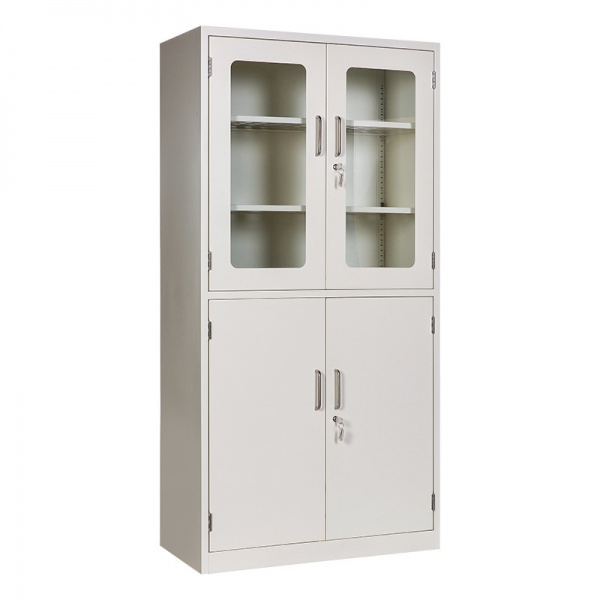
All-Steel Laboratory Medicine Cabinet
Interview

Desktop Fume Hood
The Desktop Fume Hood is a compact and versatile safety solution designed to maximize laboratory efficiency. Engineered for installation directly on central workbenches, this unit features a unique dual-sided access design, allowing two users to operate simultaneously from opposite sides. With a total height of 1500mm, it fits seamlessly into standard laboratory settings without obstructing overhead lighting or room circulation. This model is particularly ideal for educational institutions, r
Interview

Energy-Efficient Ducted Fume Hood
Laboratory Fume Hood (models V9-FG-1200 / 1500 / 1800). Dimensions 1200/1500/1800 × 900 × 2400 mm. Face velocity 0.3 m/s, 0 ppm tracer gas leakage, ultra-low 17.5 Pa static pressure. Energy-efficient design requires no extra make-up air. Narrow-edge construction maximizes workspace and viewing area. Fully certified to ANSI/ASHRAE 110-2016 and EN 14175-3-2019. Ideal for chemical, pharmaceutical, university and research laboratories.
Interview
ADDRESS
No. 609, High Tech Houju Street, Qingshanhu District, Nanchang City, Jiangxi Province




David Mabel James Elly

点击右上角
分享给朋友吧
CONTACT
Ph: +86 19318553935
+86 18079100967
+86 19318537228
+86 18170839926
Mail: james@jx-aiyi.com
mabel@jx-aiyi.com
anli@jx-aiyi.com
david@jx-aiyi.com
NEWSLETTER
